 Reviews



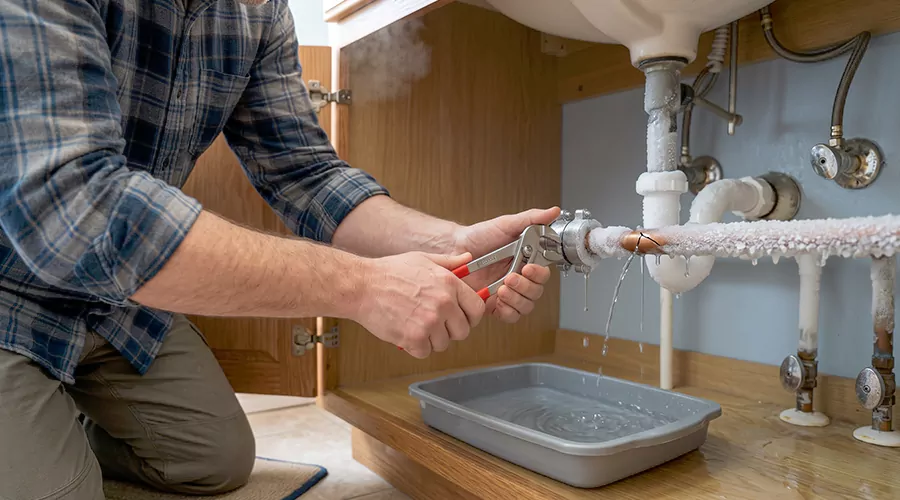
To fix frozen pipes, open the affected faucet and apply gentle heat to accessible piping until normal water flow returns. Before thawing, check for visible damage and locate your main water shutoff valve. A frozen pipe can already be cracked even when no water is leaking. Plumbers for frozen pipes can help safely thaw difficult-to-access piping and check for damage.
Professional pipe thawing may cost approximately $100 for a straightforward service. However, burst pipe repairs typically cost $200 to $3,000 in the United States according to 2026 pricing data. The correct response depends on whether the pipe is simply frozen or has already sustained damage. Restoring water flow solves only part of the problem. You must also check for leaks and correct the conditions that allowed freezing.
What Should You Do First When Your Pipes Freeze?
When a pipe freezes, locate the affected section and prepare for the possibility that it has already cracked. Check other faucets to determine whether the problem affects one fixture or several. Find your main shutoff valve before attempting any thawing.
The following precautions help prevent additional damage:
- Check other faucets: Determine whether the problem affects one fixture or several connected fixtures.
- Locate the main water shutoff: Make sure you can stop incoming water if a leak appears.
- Inspect visible piping: Look for cracks or unusual swelling.
- Check for electrical hazards: Avoid using electrical heating equipment near standing water.
- Open the affected faucet: Provide an outlet for water as the ice melts.
- Prepare absorbent materials: Keep towels available for small amounts of water.
If the pipe is already leaking, shut off the water supply rather than attempting to thaw it while pressurized. The American Red Cross recommends opening the affected faucet before applying gentle heat. It also advises checking other household fixtures because several pipes may freeze during the same cold period.
How Can You Tell Whether a Pipe Is Frozen or Burst?
A frozen pipe restricts water flow, while a burst pipe has developed physical damage that allows water to escape. Both conditions can occur together. Ice may temporarily block water from reaching a damaged section, so a rupture might remain hidden until thawing begins.
The following comparison can help identify the situation.
| Symptom | Possible Condition | Recommended Response |
|---|---|---|
| No water from one faucet | Localized frozen pipe | Inspect accessible piping |
| Several faucets have no water | Wider freezing or supply interruption | Check the affected areas |
| Frost on exposed piping | Possible freezing | Inspect before applying heat |
| Visible crack | Damaged pipe | Isolate the water |
| Water appears during thawing | Possible freeze damage | Stop thawing and isolate the supply |
| Normal flow returns without visible leakage | Frozen pipe may be thawed | Continue inspecting for damage |
A pipe should not be considered undamaged simply because the faucet begins working again.
What Are the Warning Signs of Frozen Pipe Damage?
Freeze damage can develop before water becomes visible. A pipe may split while ice is blocking the water passage. The opening may begin leaking only when temperatures rise and water can reach the damaged section.
Watch for these warning signs:
- The pipe develops a visible crack.
- An exposed section appears swollen or distorted.
- Frost develops around a vulnerable connection.
- Water flow stops during freezing weather.
- A faucet produces only a small trickle.
- Unusual moisture appears during thawing.
- Water collects beneath an exposed pipe.
- A nearby wall develops unexplained dampness.
- Water pressure changes after thawing.
- Several connections begin leaking when the system warms.
Visible damage requires a different response from an ordinary ice blockage.
How Do You Thaw an Accessible Frozen Pipe?
An accessible frozen pipe can often be thawed by gradually warming its exterior with a suitable heating method. Start near the affected faucet and work toward the frozen section. Keep the faucet open so water can flow as the blockage melts.
Follow these steps:
- Identify the section that may be frozen.
- Inspect it for visible cracks or other damage.
- Locate the appropriate water shutoff valve.
- Open the affected faucet slightly.
- Prepare a suitable gentle heating method.
- Begin warming the pipe near the faucet.
- Continue gradually toward the frozen section.
- Watch for water beginning to flow.
- Continue until normal flow returns.
- Inspect the pipe and nearby fittings for leakage.
The American Red Cross recommends electric heating pads or hair dryers for suitable accessible pipes. Towels soaked in hot water are another option. Never use a blowtorch or another open-flame device.
Using a Hair Dryer:
A hair dryer allows you to direct warm air toward an exposed pipe. Use an appropriate heat setting and keep the dryer moving. Avoid concentrating excessive heat on plastic components or nearby materials. Only use electrical equipment in a dry and electrically safe location.
Using Warm Towels:
Warm towels provide a non-electrical alternative for some accessible pipes. Soak suitable towels in warm water and wrap them around the affected section. Replace them as they cool. Avoid pouring boiling water directly onto frozen plumbing.
Increasing Room Temperature:
Raising the surrounding temperature may help when the pipe is exposed inside a cold room. Open nearby cabinet doors when doing so is safe. Allow heated indoor air to circulate around the plumbing. This approach is slower than applying gentle heat directly to an accessible section.
What Should You Do if the Frozen Pipe Is Behind a Wall?
A frozen pipe hidden behind a wall cannot be inspected as easily as exposed plumbing. Direct heating may require opening finished surfaces, which creates additional risks. Increasing the temperature of the surrounding room is a safer initial approach. Begin by checking the location of the affected fixture. A kitchen sink installed against an exterior wall may have supply pipes running through a cold wall cavity. Opening the cabinet can allow more heated room air to reach accessible sections. Do not drill into the wall to locate the pipe. Avoid placing an unapproved heating device directly against finished surfaces. If the pipe remains frozen or concealed damage is suspected, further investigation is appropriate.
What Should You Avoid When Fixing Frozen Pipes?
Excessive heat and uncontrolled thawing can create additional damage. The objective is to melt the ice gradually while watching for leakage. A frozen pipe should never be treated as an ordinary obstruction that can be forced open.
Avoid these mistakes:
- Using a blowtorch or open flame.
- Pouring boiling water over exposed piping.
- Operating electrical heaters near standing water.
- Forcing a frozen shutoff valve.
- Ignoring cracks or visible pipe distortion.
- Restoring full pressure to visibly damaged plumbing.
- Leaving a heating device unattended.
- Assuming every pipe has thawed because one faucet works.
The American Red Cross specifically warns against open-flame thawing methods because they create a fire risk.
How Do You Check for Damage After Thawing?
A thawed pipe should be inspected before normal water use resumes. Ice can temporarily prevent a damaged section from leaking. When the obstruction melts, water pressure may reveal cracks that were previously hidden.
Perform these checks:
- Observe the exposed pipe while water flow returns.
- Inspect accessible joints for fresh moisture.
- Check nearby cabinets for water.
- Examine the surrounding wall for dampness.
- Test the affected faucet under normal flow.
- Check other fixtures that may have frozen.
- Monitor the area during subsequent use.
If the pipe begins leaking, shut off the appropriate water supply immediately. Do not attempt to control a major rupture with an improvised patch while the line remains pressurized.
How Much Does Frozen Pipe Repair Cost in 2026?
Frozen pipe repair costs depend on whether the plumbing needs thawing or replacement. A frozen pipe that remains undamaged may require only controlled thawing. A split pipe needs a permanent repair, while hidden water damage can create additional expenses.
| Service | 2026 U.S. Cost Reference |
|---|---|
| Straightforward professional pipe thawing | Around $100 |
| Typical burst pipe repair | 200–3,000 |
| Average burst pipe repair | Approximately $500 |
| Pipe repair per linear foot | 150–250 |
| Extensive damage involving additional work | Can exceed $5,000 |
The figures are national estimates. Hidden plumbing and water damage restoration can increase the final cost substantially.
When Should You Call a Professional?
Professional help is appropriate when a frozen pipe is inaccessible or has already developed visible damage. A concealed rupture can release water into walls when thawing begins. Specialized equipment may also be needed when an ordinary heating method cannot safely reach the obstruction.
Seek assistance when:
- The frozen section is hidden behind a wall.
- A pipe has visibly split.
- Water begins leaking during thawing.
- Several household pipes remain frozen.
- A main supply pipe may be affected.
- Electrical equipment is exposed to water.
- Normal flow does not return after reasonable safe attempts.
A plumber can locate inaccessible frozen sections and repair damaged connections before normal pressure is restored.
How Can You Prevent Pipes From Freezing Again?
Preventing another freeze requires protecting the conditions that allowed the first ice blockage to develop. Thawing restores water flow but does not change the surrounding temperature. Insulation and adequate heating reduce the chance of repeated freezing.
Recommended preventive measures include:
- Before winter: Insulate exposed supply pipes.
- During cold weather: Keep vulnerable spaces adequately heated.
- Before severe freezing: Disconnect outdoor hoses.
- During prolonged cold: Open cabinet doors where appropriate.
- Before leaving home: Maintain suitable indoor heating.
- After an earlier freeze: Inspect the affected location for cold drafts.
The American Red Cross recommends maintaining indoor heating at no lower than 55°F when leaving home during cold weather. It also recommends protecting plumbing in unheated spaces.
Conclusion
To fix frozen pipes, identify the affected section and check for damage before applying heat. Open the connected faucet and use gentle warming methods on accessible plumbing. Never use an open flame. Once normal flow returns, inspect the pipe for leakage before resuming ordinary use. Concealed freezing or visible damage may require professional repair. This week, inspect the areas where your home's plumbing is most exposed to cold.
Frequently Asked Questions
Can frozen pipes thaw without damage?
Yes. Some frozen pipes thaw without leaking. However, the plumbing should still be inspected for hidden damage.
Should I turn off the main water supply?
If a pipe is leaking or visibly damaged, shut off the supply. For an intact frozen pipe, follow an appropriate safe thawing procedure while keeping the shutoff accessible.
Can I use a hair dryer on frozen pipes?
Yes, on suitable accessible pipes in a dry and electrically safe area. Use gradual heat.
How long does frozen pipe repair take?
A simple thaw may take less than an hour. Severe freezing or damaged concealed plumbing can require considerably more time.
Can pipes freeze again after being repaired?
Yes. Pipes can refreeze if the original cold exposure remains unchanged.